

ACCUNIQ BC300 vs InBody 270S
ACCUNIQ BC300 and InBody 270S: compare documented specifications, features and limitations. Check the reports and explanation offered by the provider. More features alone do not establish better accuracy.

ACCUNIQ BC300: when to consider it
ACCUNIQ BC300 uses multi-frequency BIA with eight contact electrodes. Results include estimated whole-body and regional fat and muscle for the arms, legs and trunk. Its foldable design supports transport.
InBody 270S: when to consider it
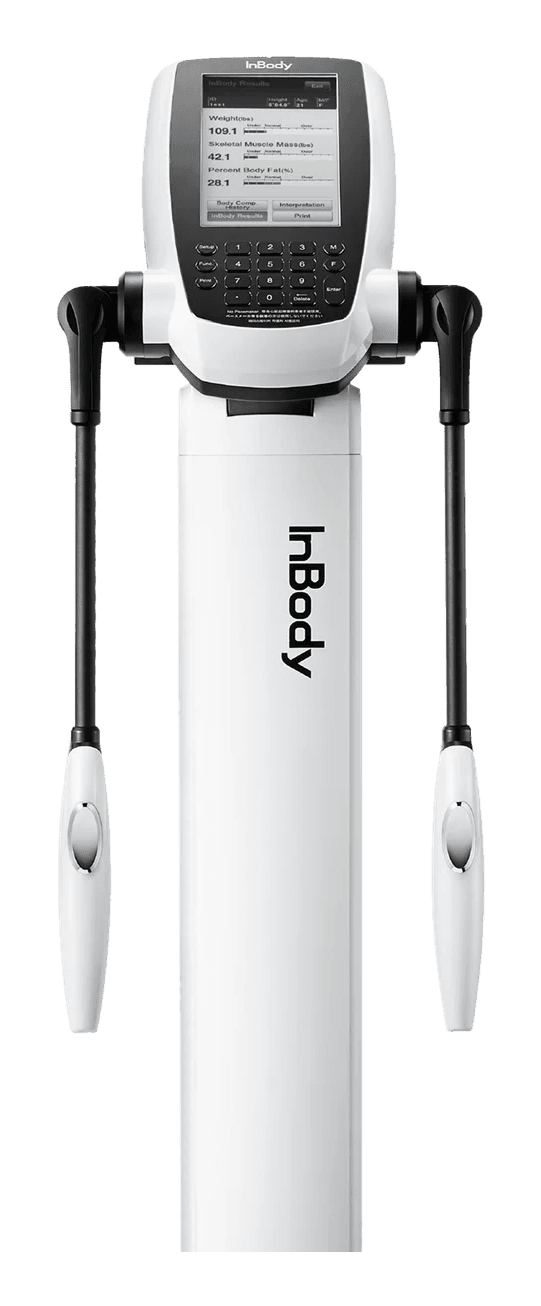
InBody270S adds whole-body phase angle to routine fat-and-muscle tracking. It is useful if you want to discuss this extra measure in a consultation. Phase angle needs context from your condition and other results, rather than serving as a stand-alone health grade.
Specifications side by side
Highlighted rows differ. Unknown values stay unknown.
| Specifications | ACCUNIQ BC300 | InBody 270S |
|---|---|---|
| Method | Multi-frequency BIA | Not verified |
| Measurement frequencies | 5, 50, 250 kHz | 20, 50, 100 kHz |
| Electrodes | 8 contact electrodes | Not verified |
| Maximum weight | 200 kg | Not verified |
| Measured regions | Both arms, both legs and trunk | Not verified |
| Recording time | Not verified | ≈ 30 s |
| Body weight range | Not verified | 2–250 kg |
| Height range | Not verified | 95–220 cm |
| Device weight | Not verified | 13.4 kg |
| Contact electrodes | Not verified | 8 |
| Measurement position | Not verified | Standing |
| Operating temperature | Not verified | 10–40 °C |
| Dimensions (width × depth × height) | Not verified | 356 × 796 × 995 mmEvidence |
| Age in the cited catalogue | Not verified | From 3 yearsEvidence |
| Impedance measurements | Not verified | 15Evidence |
| Device internal database capacity | Not verified | 100,000 recordsModel sources |
| Display | Not verified | 7″ colour touchscreen LCD, keypadModel sources |
| Display diagonal | Not verified | 7″Model sources |
| Documented interfaces | Not verified | RS-232C, 2× USB host, USB device, Ethernet, Bluetooth, Wi-Fi 2.4/5 GHzModel sources |
| Phase angle | Not verified | 1 whole-body value at 50 kHzModel sources |
| Electrodes | Not verified | 8 contact points on hands and feetModel sources |
| Report types | Not verified | Adult, child and optional TP100 thermal reportsModel sources |
Fat-free mass is not pure muscle mass. A single result is not a diagnosis. Different devices and similarly named metrics may use definitions that are not interchangeable.