

GE Lunar Prodigy Pro vs Hologic Discovery QDR
GE Lunar Prodigy Pro and Hologic Discovery QDR: compare documented specifications, features and limitations. Check the reports and explanation offered by the provider. More features alone do not establish better accuracy.

GE Lunar Prodigy Pro: when to consider it
Prodigy Pro is a GE HealthCare DXA system. The brochure distinguishes Primo, Pro and Advance software packages; Pro includes Essential Body Composition Assessment. Fat and lean-tissue outputs require the corresponding scan and software, so the device alone does not establish local service availability.
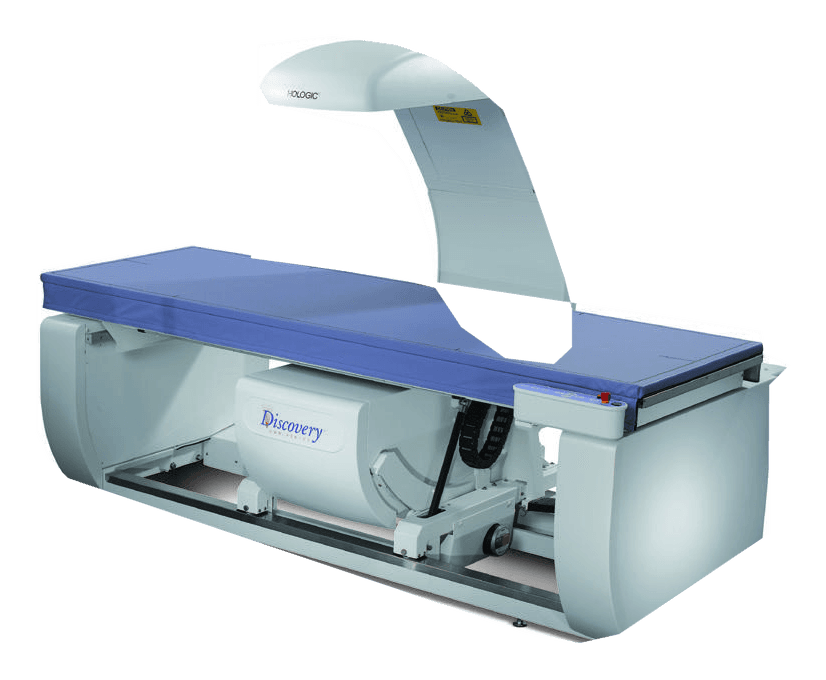
Hologic Discovery QDR: when to consider it
Discovery QDR is a family of DXA bone densitometers. The manual lists spine, hip and forearm testing across the series and whole-body scanning on A, W and Wi. A generic QDR Discovery designation does not establish whole-body analysis at a specific location.
Specifications side by side
Highlighted rows differ. Unknown values stay unknown.
| Specifications | GE Lunar Prodigy Pro | Hologic Discovery QDR |
|---|---|---|
| Method | DXA | DXA |
| Measurement position | Supine | Supine |
| Documented outputs | Bone mineral density, lean and fat tissue, percentage fat | Bone density; whole-body scan depending on variant |
| Designation scope | Pro package; distinct from Primo and Advance | Family; model letter unknown |
Fat-free mass is not pure muscle mass. A single result is not a diagnosis. Different devices and similarly named metrics may use definitions that are not interchangeable.