Malé náměstí 14/30, Hradec Králové
Price not listed


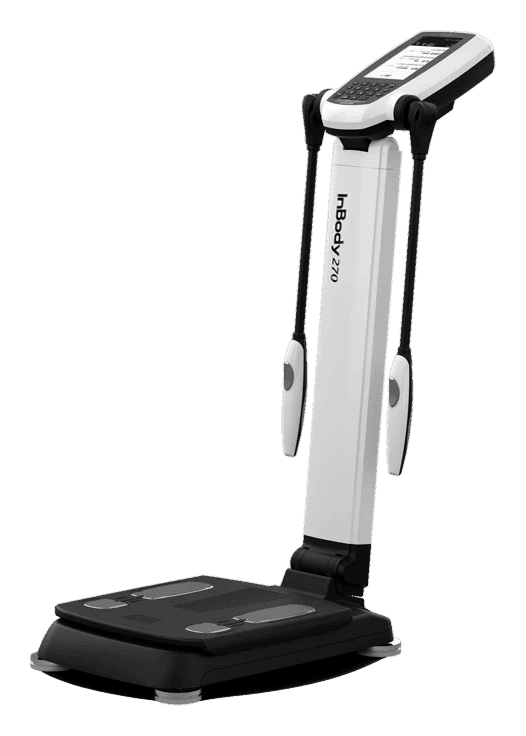
The original InBody270 gives a quick overview of fat, muscle and their distribution. It suits regular diet and training consultations, including testing at different locations. Its output coverage differs from the newer 270S.
The InBody 270 helps you see whether a change in weight mainly involves fat or muscle. Alongside the overall result, it shows separate values for the arms, legs and trunk. You take the test standing up. The foldable unit can travel between locations, so you may encounter it in different settings. Similar preparation before each test still matters when comparing your own results. The original InBody 270 and newer 270S provide different outputs, so check the full model name on your report. This page covers the original 270.
Start with weight, skeletal muscle mass (SMM), fat mass in kilograms and percent body fat (PBF). Together they tell you more than weight alone. Kilograms show the amount of fat, while the percentage shows its share of your weight. During weight loss, they may change differently. Compare the same values at each check-in rather than judging progress by one bar.
Segmental lean mass shows how tissue other than fat is distributed across five parts of the body. It includes water, so these are not kilograms of pure muscle. A left–right difference is more informative if it persists under similar conditions. One lower bar cannot identify an injury or tell you what rehabilitation is needed. Strength requires a separate test, such as handgrip measurement.
If muscle or lean mass rises unexpectedly, check total body water (TBW) too. Tests taken close together, different fluid intake or exercise can produce changes partly related to water. They do not necessarily mean you gained new muscle. TBW gives a total in litres; it does not show the extracellular water ratio ECW/TBW, which the original 270 does not provide as a standard output.
WHR estimates the unitless ratio of waist to hip circumference. It is neither visceral fat quantity nor visceral fat area (VFA) in cm². When changing models, compare the labels and units rather than similar-looking numbers. The Czech manual also lists visceral fat level; that numerical level is not VFA in cm² either. Confirm available fields for the actual report version.
BMI, InBody Score and weight-control suggestions help you understand the report. A suggested weight is a starting point for discussion, not a mandatory goal. Basal metabolic rate (BMR) is a calculated estimate of the energy needed for basic body functions, not your full daily expenditure. Protein and mineral estimates do not replace laboratory tests. Extra fields, such as the muscle index SMI, may depend on the report version.
The device records how a small electrical current passes through five parts of the body. This method is called segmental bioelectrical impedance analysis (DSM-BIA). Two frequencies produce ten impedance measurements. These are used to calculate muscle, fat and other components, rather than weighing each separately. The result is an estimate, which can be affected by changes in body water, for example.
For useful comparisons, arrange tests at a similar time of day and under similar conditions after eating, drinking and exercise. Use the restroom first, remove socks and heavy accessories, then stand quietly for a few minutes. Your hands and feet need to touch the electrodes, with your arms away from your body. The testing location will explain the required intervals from the device manual. If you have an implanted electronic medical device, tell them in advance: the manual prohibits BIA testing in this case.
The original 270 does not report whole-body phase angle. It is available on the 270S and other models that support it. The standard result does not include ECW/TBW, phase angles for individual body regions or visceral fat area. If you need these values, consider a model such as the 970/970S. You need to stand steadily and hold the electrodes during the test. If you cannot maintain this position or need to be tested lying down, a different device type is required. Blood pressure and grip strength require separate devices. Blood pressure on a combined report comes from a connected monitor.
The 270 may be enough for tracking fat, muscle and basic differences between body regions. The newer 270S adds 50 kHz and whole-body phase angle; testing takes about 30 rather than 15 seconds. The 970S provides more detailed water distribution and phase angle for individual regions. Choose according to what you want to learn, and ask the testing location how the extra values would help you.
Locations with a documented device. Each location detail describes its service and conditions.
Malé náměstí 14/30, Hradec Králové
Hradec Králové
Sukova 2/1828, České Budějovice
Not in its verified standard output. 270S adds whole-body phase angle; the S suffix matters.
No. WHR estimates the unitless ratio of waist to hip circumference. It is neither VFA in cm² nor visceral fat level.