Václavská 6, Brno
from CZK 200 / 1 test


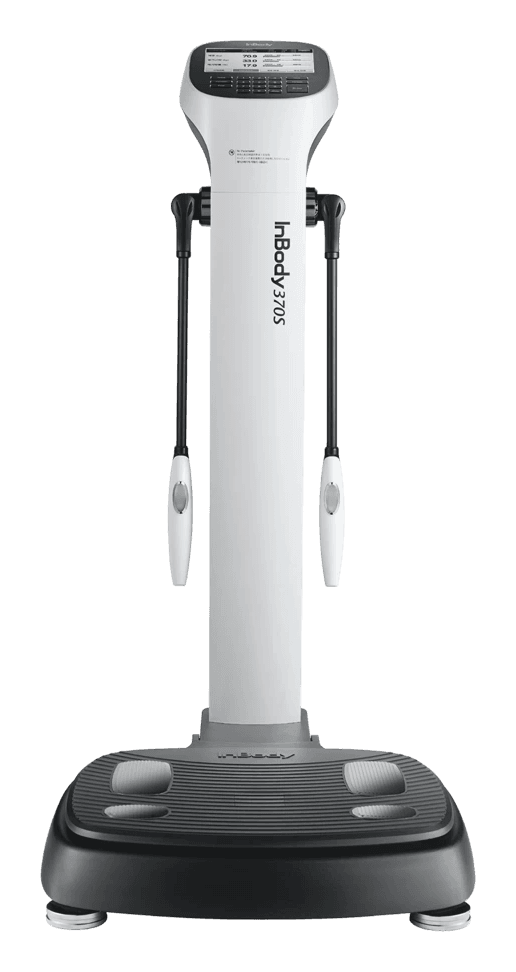
InBody370S provides a detailed muscle-and-fat overview for training or nutrition consultations. Alongside whole-body values, it shows regional distribution and visceral fat level. It suits repeat monitoring when you will make use of those measures.
370S provides a quick body composition overview, but much of its value comes from understanding the report. For everyday training or weight-loss monitoring, fat, skeletal muscle mass and their trends matter most. Coloured bands and the overall score help you navigate the result. Czech providers may offer a basic sheet or a longer BodyVision report. More pages do not necessarily mean additional independent measurements: software may calculate some values. Before booking, ask what the service includes and who will explain the results.
During weight loss, follow repeated fat mass changes and what happens to the muscle estimate. When building muscle, also check fat and total weight. A higher muscle estimate in one test can be related to water; a consistent direction across several results is more convincing.
Segmental analysis shows lean mass distribution across arms, legs and trunk. A difference between sides can be a useful reason for further assessment, rather than a diagnosis. A favourable value does not establish that a limb is strong enough or able to perform a particular movement.
The standard 370S manual lists Visceral Fat Level, an estimated level on a scale. If a BodyVision report shows cm² instead, ask how that value is calculated; it is not automatically the same measure as visceral area from another model.
TBW gives context to weight and fat-free mass. The standard manual does not list ECW/TBW or segmental water ratios. For a more detailed fluid assessment, choose a device whose actual result sheet includes those values.
History places weight, skeletal muscle and percent body fat side by side. Add context about training or preparation changes. BMR estimates resting energy; appropriate food intake also needs to account for activity and goals.
The manual allows estimated circumferences and other calculated items. These do not replace a tape measure, blood tests or a bone assessment. Blood pressure shown on a combined report comes from an external monitor rather than the InBody electrodes.
Hands and bare feet contact the electrodes. The device measures electrical impedance in each limb and the trunk, then uses it to estimate body composition. SMFIM in the documentation refers to simultaneous measurement at multiple frequencies. Results still depend on hydration, recent activity and correct posture.
Follow your provider’s instructions and keep time of day, food and fluid conditions and the interval after exercise similar on follow-up visits. Use the toilet and stand quietly for a few minutes beforehand. Testing is barefoot; arms must not touch the trunk while holding the electrodes. Declare an electronic medical device such as a pacemaker beforehand: the 370S manual prohibits testing in that situation.
The standard report does not add whole-body or segmental phase angle. Choose another specific model if you need these measures. Extended software can change labels, units and report contents. Compare the same measure and check the source of supplementary calculations. Standing posture and correct electrode contact are necessary. Other devices are intended for supine or seated measurement.
The original 370 has a different design and longer test; its standard brochure also does not list visceral level. 270S is a lighter portable model with whole-body phase angle. 770S and 970S add more detailed water and phase-angle analysis. Keep the model and software names with each result when following a longer-term trend.
Locations with a documented device. Each location detail describes its service and conditions.
Václavská 6, Brno
Chrpová 537, Liberec
Opavská 962/39, Ostrava
Aloise Jiráska 3149, Teplice
The manual’s approximately 15 seconds covers the test itself. Preparation, data entry, printing and consultation add time.
No. Blood pressure on a combined sheet comes from a separate connected monitor.